
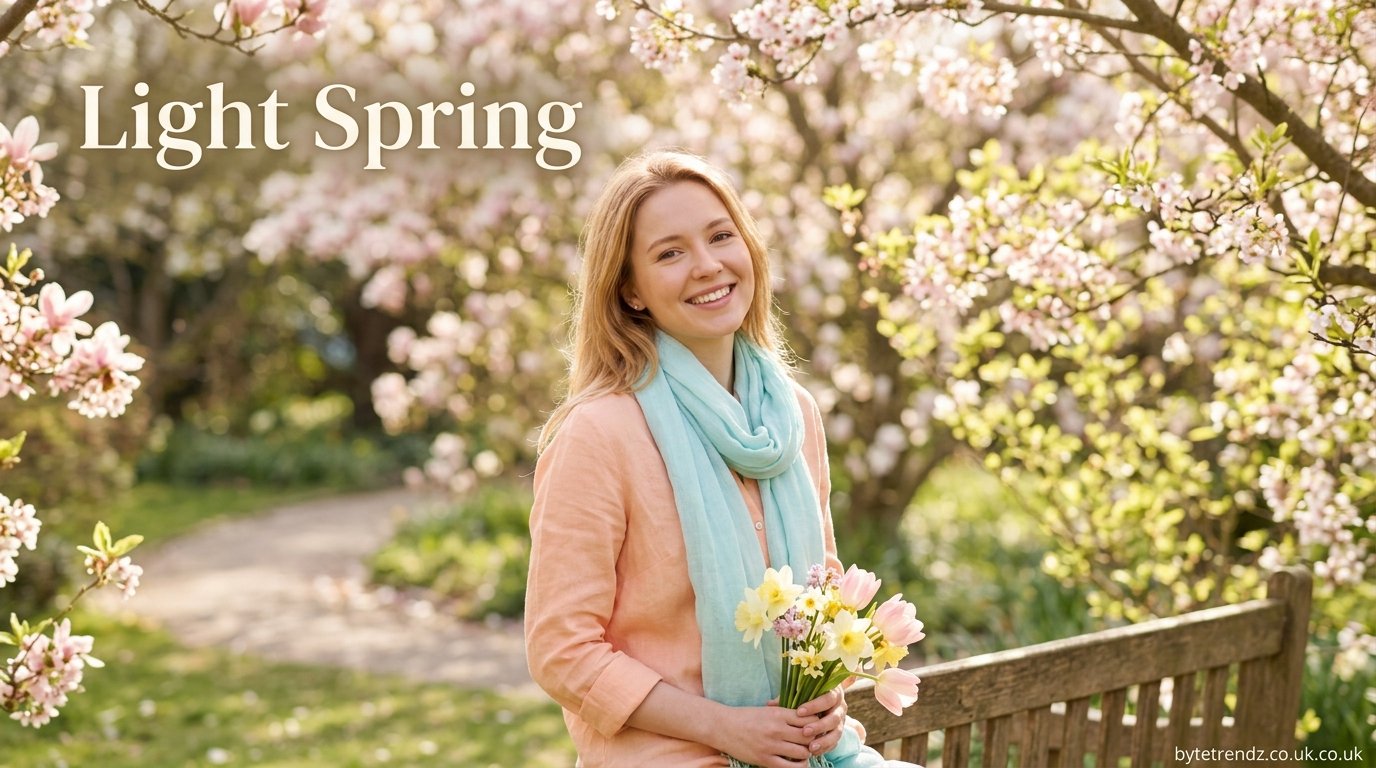

If you have ever felt washed out in black or overpowered by bold, saturated colors, there is a good chance your natural coloring belongs to a lighter, warmer palette than you realized. Light Spring is one of the twelve seasons used in modern seasonal color analysis, and it is known for its soft glow, gentle warmth, and airy freshness. People who fall into this category often have a delicate, sunlit quality to their skin, hair, and eyes that looks best in colors that echo that same lightness rather than fighting against it.
This guide walks through what Light Spring really means, how to recognize it in yourself, and how to use it to choose clothing, makeup, and accessories that genuinely flatter your natural features. The goal is not to hand you a rigid rulebook, but to help you understand the logic behind the palette so you can apply it with confidence.
What Is the Light Spring Color Season
<cite index=”4-1″>Light Spring combines lightness with warmth, and while it shares the freshness common to all Spring seasons, it also carries some of the gentle softness usually associated with Summer.</cite> It sits at the meeting point of two different color families, which is why people often describe it as feeling like a bridge between seasons rather than a fully separate category.
<cite index=”6-1″>Within the twelve-season system, Light Spring is one of three Spring types, and its core qualities are warmth, lightness, and clarity, with lightness being the most defining trait of the three.</cite> <cite index=”6-1″>On the seasonal flow chart it sits between Light Summer and True Spring, borrowing the softness of Light Summer and the warmth of True Spring, without drifting into Summer’s cool undertones or Spring’s more intense saturation.</cite> This middle-ground position is exactly what makes Light Spring so distinctive and, for many people, a genuine relief once they discover it, because it finally explains why both very cool and very bright colors have never quite worked for them.
Key Characteristics of a Light Spring
The defining feature of this season is not any single trait but the overall impression created when skin, hair, and eyes are considered together. <cite index=”9-1″>The overall lightness and warmth of the whole picture matters more than any one feature viewed in isolation.</cite> This is an important point, because many people try to diagnose their season by focusing only on hair color or only on eye color, when in reality the combination is what counts.
Contrast level plays a major role here as well. <cite index=”9-1″>A Light Spring typically has low to medium contrast, meaning the hair, eyes, and skin sit closer together in lightness than they would for a deeper or more dramatic season.</cite> This low contrast is precisely why very dark or very cool colors tend to overwhelm a Light Spring’s natural coloring, creating a harsh line between the person and the garment instead of a smooth, flattering blend.
Skin Tone and Undertone Traits
Skin undertone is one of the clearest signals of a Light Spring. <cite index=”9-1″>Fair to medium skin with a warm peachy or golden undertone is typical, and the warmth is usually visible even before any color analysis is done.</cite> This golden or peachy cast means that stark white and cool-toned foundations often look slightly off, while warmer ivory and cream shades blend in naturally.
<cite index=”5-1″>A creamy or peachy complexion paired with soft, warm eyes is a common combination for this season.</cite> It is worth remembering that skin tone alone rarely tells the whole story, since undertone can be subtle and easy to misread without comparing several fabric swatches directly against the face in natural daylight.
Hair and Eye Color Patterns
Hair color for this season tends to stay on the lighter end of the spectrum, though there is more variation than people expect. <cite index=”9-1″>Hair ranging from platinum to light golden brown is common among Light Springs, always with a warm rather than ashy quality.</cite> <cite index=”1-1″>It is entirely possible to be a Light Spring with brown, red, or blonde hair, as long as the tone reads warm instead of cool or ashy.</cite>
Eye color follows a similar pattern of lightness and warmth. <cite index=”9-1″>Light-colored eyes such as blue, green, hazel, or light brown are typical for this season.</cite> <cite index=”1-1″>Light brown eyes are also common, and having features that fall slightly outside the usual description does not automatically rule someone out of this category, since natural coloring is genuinely diverse.</cite>
The Light Spring Color Palette Explained
The palette itself is best understood as a softened version of the classic Spring colors. <cite index=”4-1″>It includes medium-saturated, low-contrast, warmish colors such as rose pinks and grass greens, essentially the standard Spring palette with some intensity and saturation removed.</cite> This softening is what separates Light Spring from its bolder Spring relatives while still keeping the warmth that defines the entire Spring family.
<cite index=”8-1″>The focus stays on colors with relatively high chroma rather than very muted tones, spread across a range of lighter values, with particular emphasis on warm hues like reds, oranges, yellows, corals, pinks, and greens.</cite> Think of a spring garden just after sunrise: soft peach, light coral, buttery yellow, pale aqua, and warm sky blue all belong naturally in this space, creating a look that feels fresh rather than faded.
Building a Light Spring Wardrobe
When building a wardrobe around this palette, neutrals deserve just as much attention as accent colors. <cite index=”7-1″>Light ivory, sand, light warm tans, dove grey, and light navy work well as neutral building blocks, since darker neutrals can easily look heavy against a Light Spring’s natural softness.</cite> Choosing these lighter, warmer neutrals for staples like blazers, trousers, and coats creates a base that quietly supports brighter accent pieces instead of competing with them.
For accent colors, the goal is to keep things fresh without going stark. <cite index=”7-1″>Light yellow, light peach, warm pinks, watermelon red, mint, turquoise, aqua, and lavender all sit comfortably within the Light Spring range.</cite> Layering a few of these together, such as pairing a peach top with mint accessories, tends to look more cohesive than mixing in colors from a cooler or darker season, because everything stays within the same warm, light family.
Best Makeup Colors for Light Spring
Makeup for this season generally follows the same logic as the wardrobe: lightness and warmth over intensity and depth. Soft peachy blushes, warm coral lipsticks, and golden-toned bronzers tend to enhance a Light Spring’s natural glow rather than mask it. Heavy contouring or very dark lip colors often create a contrast that does not match the face, which can make the overall look feel unbalanced rather than polished.
Eye makeup benefits from the same restraint. Warm taupes, soft golds, and light coral or peach eyeshadows tend to bring out the natural clarity of light-colored eyes without overpowering them. <cite index=”6-1″>When these colors are styled with intention, the skin often looks brighter and the features appear softer, which can reduce the need for heavier makeup overall.</cite>
Light Spring vs Light Summer vs True Spring
Comparing neighboring seasons is one of the fastest ways to understand where Light Spring actually sits. <cite index=”6-1″>Compared to True Spring, Light Spring reads lighter, softer, and more pastel, while compared to Light Summer it is warmer and slightly brighter.</cite> These small shifts in warmth and saturation are exactly why people sometimes get sorted into the wrong season during a quick self-assessment.
<cite index=”6-1″>Light Summer shares the same lightness and delicate quality as Light Spring but leans toward a cooler, softer undertone instead.</cite> Because Light Spring and Light Summer are so closely related, many people genuinely fall near the border between them, and testing both cool and warm versions of a color side by side against the skin is often the clearest way to settle the question.
Colors to Avoid
Just as important as knowing which colors work is understanding which ones tend to fight against this coloring. Very dark shades such as pure black, deep charcoal, or navy can create a level of contrast that a Light Spring’s face simply does not have naturally, which often results in the clothing looking heavier than the person wearing it. The same applies to icy, purely cool colors, which clash with the underlying warmth of the skin and can leave it looking dull or slightly grey.
Overly muted or dusty tones can also work against this season, since Light Spring thrives on clarity rather than heaviness. A dusty mauve or a muddy olive, for example, tends to mute the natural brightness in the skin instead of enhancing it. The safest approach is to keep colors both light and clear, avoiding anything that reads as either too dark or too flat.
Jewelry and Accessories for Light Spring
Metal choice matters more than people often expect, and for this season, warm metals generally win out. Gold, rose gold, and warm-toned brass tend to sit naturally against warm undertones, echoing the golden quality already present in the skin and hair. Silver is not necessarily off-limits, but it often looks slightly harsher against this coloring compared to its warmer counterparts.
Accessories in general should follow the same light, clear logic as the rest of the palette. Delicate chains, soft coral or peach stones, and lightweight designs tend to complement a Light Spring far more than chunky, dark, or heavily saturated pieces. The idea is not to disappear into muted tones but to choose pieces that add sparkle without adding weight.
Conclusion
Light Spring is ultimately about working with a natural sense of warmth, lightness, and clarity rather than against it. Once the underlying pattern clicks, choosing flattering colors becomes far less about strict rules and much more about recognizing which shades genuinely echo your own coloring. Whether you are refreshing a wardrobe, rethinking a makeup bag, or simply trying to understand why certain colors have always felt right while others fell flat, this season offers a clear and forgiving framework to build from.
Frequently Asked Questions
Can a Light Spring wear black? Black tends to create more contrast than a Light Spring’s naturally soft coloring can support, often making the face look tired or washed out. Warm charcoal or deep warm brown usually works better as a substitute for occasions that call for a darker look.
How is Light Spring different from True Spring? True Spring is brighter and more saturated overall, while Light Spring keeps the same warmth but in a softer, lighter, more pastel form.
What if some of my features do not match the typical description? Natural coloring varies widely, so having one feature outside the usual pattern does not automatically rule out a season. The overall impression of lightness and warmth across skin, hair, and eyes matters more than any single trait.
Is Light Spring the same as Light Summer? They are closely related and share a similar lightness, but Light Spring carries a warm undertone while Light Summer leans cool, which is the main difference between the two.
Do I need a professional analysis to know my season? A professional draping session can offer more precision, but comparing warm and cool fabric swatches against your skin in natural daylight is a reasonable way to get a good sense of your season on your own.
