

Spring has always been linked with fresh starts, blooming gardens, and a burst of energy after a long winter. In the world of seasonal color analysis, the True Spring color palette captures that same feeling. It is one of the warmest and brightest palettes among the twelve seasonal color groups, and it belongs to people whose natural coloring radiates warmth, clarity, and light. If you have ever wondered why some colors make you look tired while others instantly brighten your face, understanding your color season, especially True Spring, might be the answer you have been searching for.
This guide walks you through what True Spring really means, how to recognize it in your own features, which colors work best, and how to bring this palette into your wardrobe, makeup, and even your home. Whether you are new to color analysis or simply curious about warm color palettes, this article will give you a clear and practical understanding of True Spring.
What Is the True Spring Color Palette
True Spring, sometimes called Warm Spring, sits at the heart of the spring color family within the twelve-season color analysis system. It represents the purest expression of spring’s warmth, combining golden undertones with high brightness and clarity. Unlike Light Spring, which leans softer and cooler, or Bright Spring, which pushes saturation to its peak, True Spring keeps every color dimension in balance while staying firmly on the warm side of the spectrum.
The defining feature of this palette is its complete absence of coolness. Every shade contains a yellow or golden base rather than a blue one, which means even colors that are usually considered cool, such as blue or purple, take on a warmer twist when translated into the True Spring range. Think of turquoise instead of icy blue, or warm violet instead of a cool lavender. This warmth is what separates True Spring from the summer and winter seasons entirely.
Another important quality is clarity. True Spring colors are never muted, dusty, or grayed down. They are clean, saturated, and full of life, much like the vivid colors you see in a garden during the height of spring bloom. This clarity, combined with warmth, gives the palette its signature sunny and cheerful character.
Key Characteristics of a True Spring Person
Identifying whether you belong to the True Spring category starts with observing your natural coloring rather than your clothing or makeup choices. People with this seasonal type typically have warm, golden undertones in their skin, which is often mistaken by those with fair complexions who assume light skin automatically means cool undertones. In reality, undertone and depth are two separate things, and a person can have light skin with a distinctly warm base.
Eyes play a significant role in this analysis as well. True Spring eyes tend to be bright and clear rather than deep or smoky in appearance. Common eye colors include warm hazel, golden brown, clear green, or bright blue with golden flecks. Hair color usually falls somewhere between golden blonde and warm reddish brown, always carrying a sunny, golden quality rather than ashy or cool tones.
It is worth noting that no one needs to match every single trait perfectly to fall into this category. Seasonal color analysis looks at the overall impression created by your skin, hair, and eyes together, along with the medium contrast that typically exists between these features. If your overall look feels warm, bright, and fresh rather than muted or cool, True Spring is likely a strong match for you.
The Best Colors in the True Spring Palette
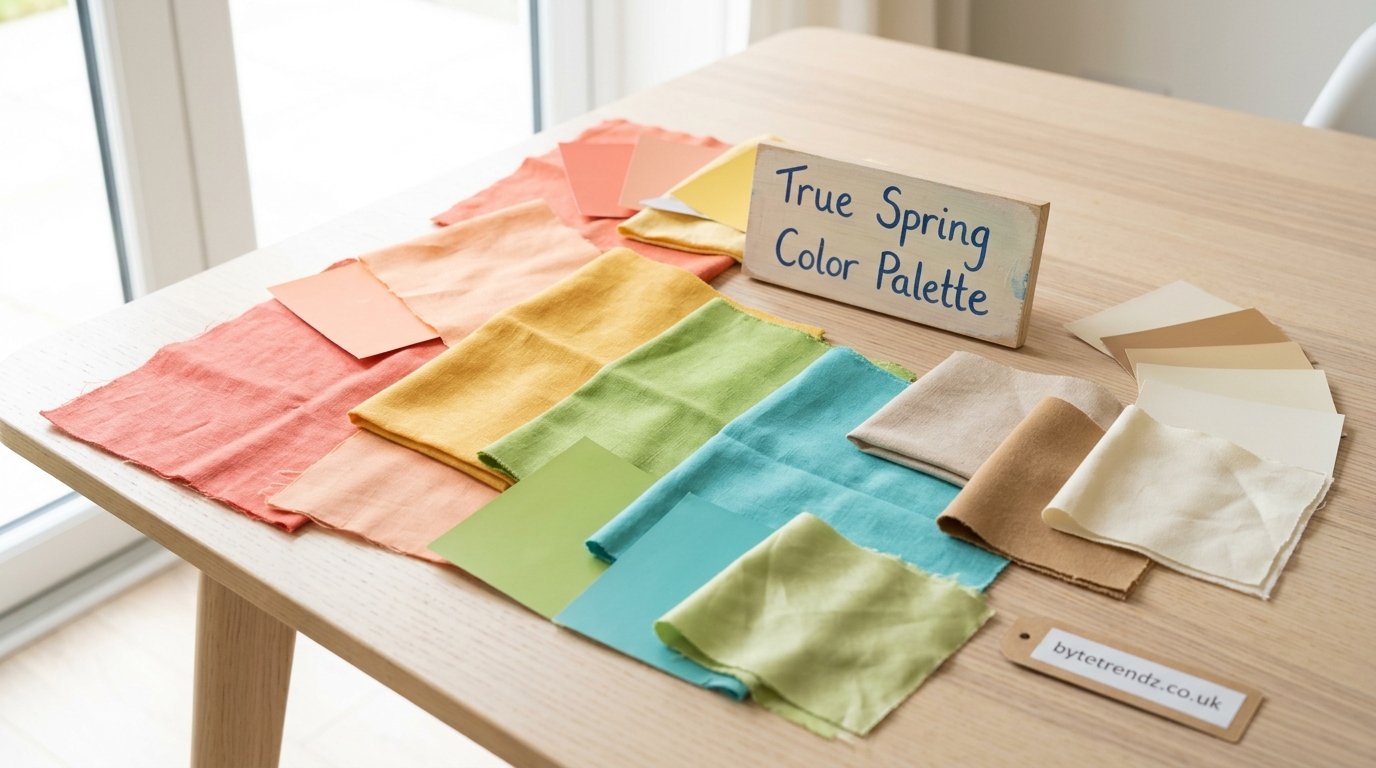
The True Spring wardrobe color palette is full of energy. Golden yellow, warm coral, peach, and apricot form the heart of this collection, echoing the freshness of spring blossoms and early sunshine. These shades work beautifully as statement pieces, whether in a blouse, dress, or accessory, because they naturally draw attention to the face in a flattering way.
Greens also play a major role in this palette, particularly warm grass green, clear leaf green, and turquoise. These colors mimic new growth and give an outfit a lively, natural feel without ever appearing dull. Blues within this palette lean toward warm variations such as bright turquoise or teal rather than icy or navy-heavy tones, since true blue can feel slightly out of place against warm coloring.
Neutrals for True Spring are just as important as the brighter accent shades. Ivory works far better than stark white because it maintains the warmth of the overall look. Camel, warm tan, golden brown, and a warm charcoal or bright navy can serve as grounding neutrals for everyday outfits, allowing the brighter colors to stand out when needed without overwhelming the wearer.
Colors to Avoid If You Are a True Spring
Just as important as knowing which colors to wear is understanding which ones to avoid. Cool, icy shades such as pastel blue, cool lavender, or silvery gray tend to clash with warm undertones, often making the skin appear sallow or tired. These colors belong more naturally to summer or winter palettes, where coolness is the dominant quality.
Muted and dusty tones are another category to approach carefully. Shades that have been grayed down, such as sage green, mauve, or muted terracotta, lack the brightness that True Spring thrives on. While these colors might look elegant on an Autumn or Summer type, they can flatten the natural radiance of a True Spring complexion.
Stark black is often the most challenging color for this palette. Pure black can create too much contrast and harshness against warm, bright features, making the face look washed out rather than framed. When a darker shade is needed, warm charcoal or deep warm brown tends to work far better than true black.
True Spring vs Other Spring Seasons
Within the broader spring family, there are usually three or four related seasons, and understanding the differences helps clarify why True Spring stands apart. Light Spring shares the same warmth but is softer and lighter overall, almost as if white has been blended into the palette, which reduces intensity while keeping a gentle glow.
Bright Spring, on the other hand, takes saturation to its highest point, sometimes even leaning slightly cooler than True Spring at the edges. It carries more contrast and a sharper vibrancy compared to the balanced nature of True Spring, which sits comfortably in the middle without leaning too far in any single direction.
True Spring’s opposite on the color wheel is often considered to be True Autumn. While both share a warm foundation, the key difference lies in clarity. True Spring is bright and clean, while True Autumn is rich, earthy, and more subdued. Comparing yourself against these neighboring seasons, rather than trying to force a fit into just one description, often makes it easier to pinpoint your true category.
How to Build a True Spring Wardrobe
Building a wardrobe around this palette starts with choosing a handful of reliable neutrals that can anchor everyday outfits. Ivory, camel, and warm tan are excellent choices for basics like trousers, blazers, and knitwear, since they pair effortlessly with the brighter shades without competing for attention.
Once the neutral foundation is set, bright accent pieces can be layered in through tops, scarves, or outerwear. A coral blouse, a turquoise scarf, or a golden yellow cardigan can transform a simple outfit into something that feels fresh and alive. The goal is to let these warm, saturated colors sit close to the face, where they can enhance natural skin tone and eye color most effectively.
Accessories offer another easy way to incorporate this palette without a full wardrobe overhaul. Warm gold jewelry generally suits True Spring far better than silver, since silver’s cool tone can create a slight mismatch with warm skin. Bags, shoes, and belts in caramel or warm brown tones tend to complete outfits nicely while staying true to the season’s warm foundation.
Makeup Tips for the True Spring Palette
Makeup choices for True Spring should follow the same warm, bright philosophy as clothing. Foundation and concealer should always lean toward golden or peach undertones rather than pink or neutral ones, since matching the undertone correctly makes a far bigger difference than matching depth alone.
For blush and lip color, peach, coral, and warm orange-red shades tend to look most natural and flattering. These tones mimic a healthy, sun-kissed glow rather than a stark contrast against the skin. Eyeshadow palettes built around warm bronze, gold, soft peach, and touches of teal or turquoise can beautifully complement bright eyes without overpowering them.
Highlighter is another area where warmth matters. A golden or champagne highlighter will enhance the natural radiance associated with this season, while cooler, icy highlighters can look slightly out of place. Even eyeliner benefits from warmth, with brown, bronze, or deep teal often working better than harsh black for everyday looks.
Bringing True Spring Colors Into Your Home
Seasonal color palettes are not limited to clothing and makeup; they can also guide interior design choices for those who want a cohesive, personal environment. Soft ivory walls paired with accents of coral, turquoise, or golden yellow can create a space that feels warm and inviting rather than cold or clinical.
Textiles such as cushions, throws, and curtains offer an easy way to introduce these bright, warm colors without a major renovation. A camel-colored throw blanket or coral accent pillows can instantly shift the mood of a room toward the cheerful energy associated with True Spring.
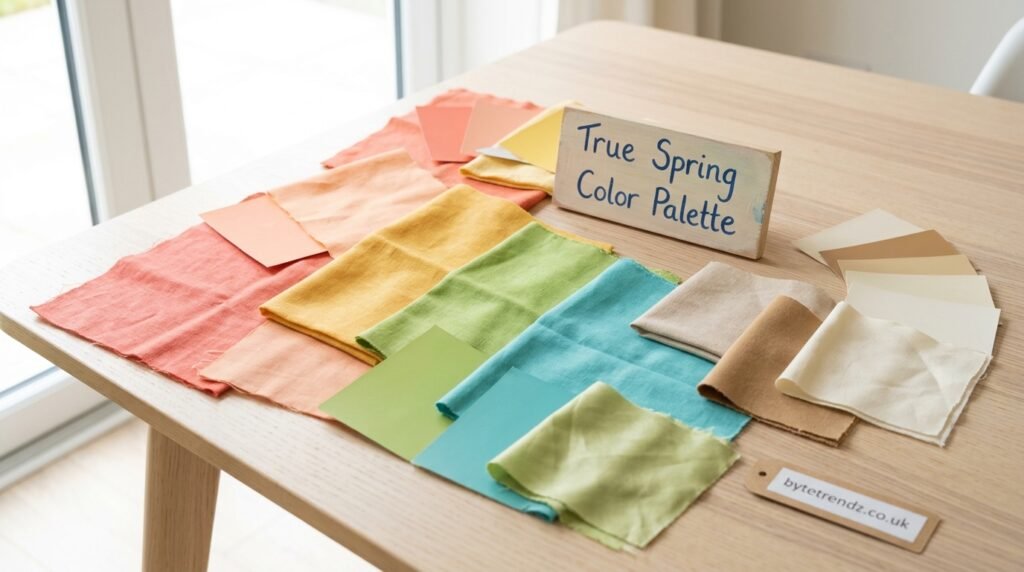
For those who enjoy a more curated approach, keeping a small swatch reference of favorite True Spring shades, whether fabric samples or paint chips, can make future decorating decisions faster and more consistent. This same method used for building a wardrobe capsule works just as well for home styling.
Common Mistakes When Identifying Your Color Season
One of the most frequent mistakes people make is assuming that skin tone alone determines their season. Depth, undertone, and clarity all work together, and focusing on just one factor, such as whether skin is fair or dark, can lead to an inaccurate conclusion. A person can have fair skin and still carry strong warm undertones typical of True Spring.
Another common error is comparing yourself too closely to celebrities associated with a particular season. While it can be helpful to see examples of well-known True Spring individuals, real-life coloring is often more subtle and nuanced than a single photograph can capture. Lighting, hair dye, and makeup can all distort how someone’s natural coloring appears in images.
Finally, many people give up too quickly if they do not match every listed characteristic perfectly. Seasonal color analysis is based on overall impression rather than a strict checklist. If most of your features point toward warmth, brightness, and clarity, it is worth trying True Spring colors close to your face and observing the difference before ruling the season out.
Conclusion
The True Spring color palette offers a warm, sunny, and energetic approach to color that mirrors the very best of the spring season itself. From golden yellows and warm corals to fresh greens and turquoise, these shades are designed to bring out natural warmth, brightness, and clarity in those who wear them. Whether you are updating your wardrobe, refreshing your makeup routine, or simply decorating your living space, understanding this palette gives you a practical, reliable framework for choosing colors that genuinely work with your natural coloring rather than against it. Like any form of color analysis, the goal is not to follow rigid rules but to use these guidelines as a starting point for discovering what makes you look and feel your best.
Frequently Asked Questions
What is the main difference between True Spring and Bright Spring? True Spring is warm and balanced, while Bright Spring pushes saturation and contrast even further and can lean slightly cooler at times. True Spring keeps warmth as its dominant trait, whereas Bright Spring is defined mainly by intensity.
Can I be a True Spring if I have dark hair? Yes, as long as your hair carries warm, golden undertones rather than cool or ashy ones, and your overall coloring shows warmth and clarity, dark hair does not automatically rule out True Spring.
Is black completely off-limits for True Spring? Pure black is generally not recommended because it can create too much contrast against warm, bright features. Warm charcoal or deep warm brown usually works as a better alternative when a dark shade is needed.
How can I tell if I have warm or cool undertones? Warm undertones typically show golden, peachy, or yellow tones in the skin, while cool undertones show pink, red, or blue tones. Holding gold and silver jewelry next to your skin, or comparing how coral versus icy pink colors look against your face, can offer helpful clues.
Do I need a professional color analysis to know if I am a True Spring? While a professional draping session offers the most accurate result, many people can get a strong sense of their season by carefully comparing warm, bright colors against cooler, muted ones in natural daylight and observing which shades make their skin and eyes look most alive.
