


Autumn hair color trades bright, sun-driven tones for something warmer and quieter. As the leaves shift from green to copper and rust, salons see the same pattern in the chair: clients want richer, more dimensional color that mirrors the season outside. This guide covers the shades defined this year, how to pick one that actually suits your skin tone, and how to keep it looking fresh once you’ve committed.
What Makes a Hair Color “Autumn”?
An autumn hair color leans warm, rich, and slightly muted rather than bright or icy. Think chestnut, auburn, copper, caramel, and espresso brown — colors pulled straight from turning leaves and harvest produce, rather than the sun-bleached blondes of summer. Colorists this year describe the shift as less about picking a brand-new color and more about adding warmth and depth to a base that’s already there.
The Top Autumn Hair Color Trends for 2026
1. Velvet Espresso
A glossy, high-shine brown with a glass-like finish. It reads deep and rich in dim light but still catches dimension in the sun, which is why colorists are recommending it for brunettes who want a subtle seasonal shift rather than a dramatic one.
2. Spiced Auburn and Cinnamon
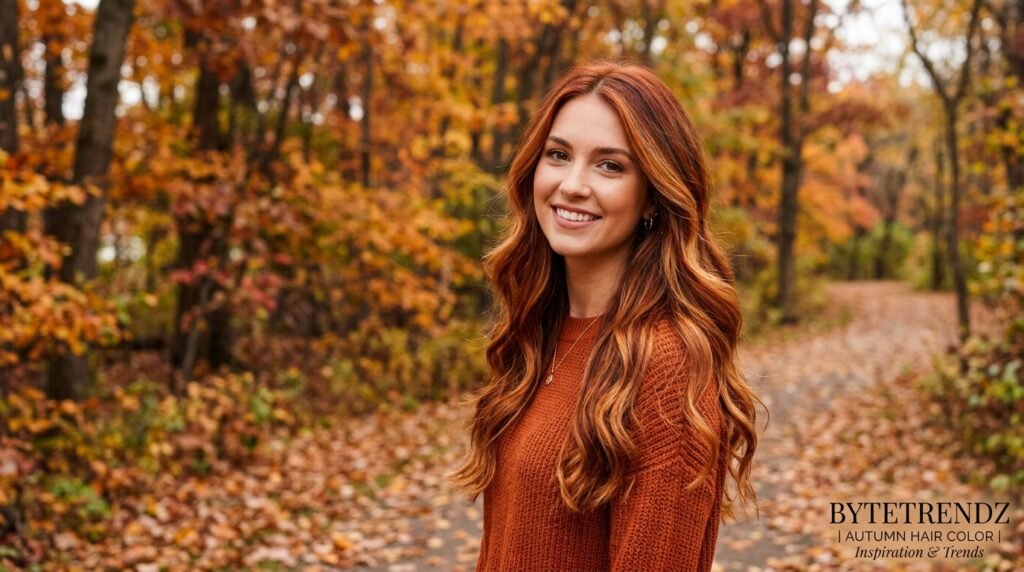
Red is having a real moment this year. Rather than the vivid, almost fantasy reds of past seasons, 2026’s auburns and cinnamons run more brown-based and natural, so they read as an enhancement rather than a costume change.
3. Mulled Wine
A deep, purple-tinged red that has become a fall mainstay for brunettes wanting a noticeable change that still stays on the darker, more wearable end of the spectrum.
4. Golden Honey Blonde
For blondes who don’t want to go fully brunette, golden honey offers warmth without abandoning lightness. It’s less bright than a summer blonde but keeps enough shine to avoid looking flat.
5. Camel and Beige Blonde
A cozy, low-maintenance blonde that trades stark platinum for a softer, creamier finish — easier to keep looking intentional as it grows out.
6. Salted Caramel on Espresso Base
A dark espresso base with caramel dimension woven through it. Because the root area stays dark, regrowth is far less noticeable, which makes this one of the lower-maintenance options on this list.
7. Smoky, Softened Blondes
Ash and platinum aren’t disappearing, but they’re getting gentler edges this year — less stark contrast, more blended transition from the roots.
How to Choose the Right Autumn Shade for Your Skin Tone
Picking a color that photographs well on a mood board is one thing. Picking one that actually flatters your face is a separate skill, and it comes down to matching warmth.
Warm undertones (skin that looks best in gold jewelry, veins that read greenish): lean into copper, auburn, golden brown, and honey blonde. These colors amplify your natural warmth instead of fighting it.
Cool undertones (skin that looks best in silver, veins that read blue): softer, muted versions work better than bright orange-based tones — think cool-toned mahogany, cocoa brown, or a smoky blonde rather than golden caramel.
Neutral undertones: you have the most flexibility and can pull off most shades on this list, from espresso to soft copper.
A quick way to check: look at the inside of your wrist in natural light. Greenish veins usually mean warm undertones; blue or purple veins usually mean cool. If you genuinely can’t tell, you likely lean neutral — which is good news, since it widens your options.
Autumn Hair Color by Face-Flattering Category
- Fair skin, warm undertones — honey blonde, light copper, soft auburn
- Fair skin, cool undertones — cool mahogany, ash brown, soft rose-brown
- Medium skin, warm undertones — cinnamon, chestnut, golden brown
- Medium skin, cool undertones — cocoa brown, deep mahogany
- Deep skin, warm undertones — rich auburn, mulled wine, espresso with copper highlights
- Deep skin, cool undertones — jet espresso, blue-black, cool dark chocolate
Maintenance: Keeping Autumn Color Looking Fresh
Warm tones — especially copper and auburn — fade faster than cool tones because red pigment molecules are physically larger and wash out of the hair shaft more quickly. A few habits make a real difference:
- Use color-safe, sulfate-free shampoo. Sulfates strip pigment along with dirt and oil.
- Wash in cooler water. Hot water opens the hair cuticle and speeds up color fade.
- Cap heat styling around 180°C (356°F). Higher heat breaks down pigment faster.
- Use a shower filter if you’re in a hard water area. Mineral buildup dulls warm tones and can turn copper muddy within weeks.
- Book a gloss every 4–6 weeks. A gloss (rather than a full re-dye) refreshes tone and shine without the commitment of a new color appointment.
Salon vs. At-Home Color
Espresso, auburn, and darker tones are generally safer for at-home application since they’re closer to most people’s natural base. Anything involving lightening — golden blonde on dark hair, or dimensional balayage — is worth leaving to a colorist, since uneven lightening is difficult to fix at home and can damage hair if it’s over-processed.
Frequently Asked Questions
What is the most popular hair color for fall 2026? Warm, glossy browns — particularly espresso shades with high shine — and natural-looking reds like spiced auburn and cinnamon are the two trends colorists mention most for this season.
What hair color is best for autumn skin tones? If you have warm undertones, copper, auburn, golden brown, and honey blonde tend to be the most flattering. Cool undertones generally look better in muted mahogany, cocoa brown, or softened ash tones.
Does autumn hair color fade faster than other seasons? Warm and red-based tones fade faster than cool or neutral tones regardless of season, because red pigment molecules are larger and rinse out more easily. Using color-safe shampoo and limiting hot water and heat styling slows this down.
Can I go from summer blonde to autumn brunette without damaging my hair? Yes, going darker is one of the lower-damage color changes since it typically doesn’t require lightening. A colorist can also add lowlights instead of a full dye job for a more gradual transition.
How often should I touch up autumn hair color? Most autumn shades need a root touch-up every 4–8 weeks and a gloss refresh every 4–6 weeks to maintain depth and shine, though darker bases with dimension (like espresso with caramel pieces) can stretch longer between appointments.
Final Thought
The shades autumn hair color that stand out most this year aren’t the boldest ones — they’re the ones with the most dimension and shine. Whether you land on a glossy espresso, a natural auburn, or a soft camel blonde, matching the tone to your undertone will do more for how it looks than the specific trend name ever will.
