


Choosing the right colors for your clothes, makeup, and even your home can feel confusing when there are endless options at every store. This is where the idea of a seasonal color palette becomes useful. It is a styling method that connects your natural coloring, such as your skin tone, hair color, and eye color, to a group of shades that suit you best. Once you understand your seasonal color palette, shopping and getting dressed become much simpler, because you already know which colors work in your favor.
This concept has been around for decades, but it has become popular again through social media and online quizzes. People are now more curious than ever about personal color analysis and how it can improve the way they look and feel. In this article, we will walk through the basics of seasonal color palettes, how they are grouped, and how you can start using this knowledge in everyday life.
What Is a Seasonal Color Palette
A seasonal color palette is a group of colors that naturally complement a person’s skin undertone, hair shade, and eye color. The idea is based on the belief that everyone’s natural coloring fits into a broader pattern, similar to how nature changes through spring, summer, autumn, and winter. Each of these four seasons represents a distinct combination of warmth, depth, and clarity.
The method was popularized by Carole Jackson in her book Color Me Beautiful during the early 1980s, and it remains the foundation that most modern stylists still reference today. Instead of guessing which colors might suit you, this system gives a structured way to identify shades that bring out your natural glow rather than working against it.
Understanding your seasonal color palette is not about limiting your choices. It is about knowing which shades make your skin look healthy and your features stand out, so you can make more confident decisions when picking outfits, makeup, or accessories.
The Four Main Seasonal Color Palettes
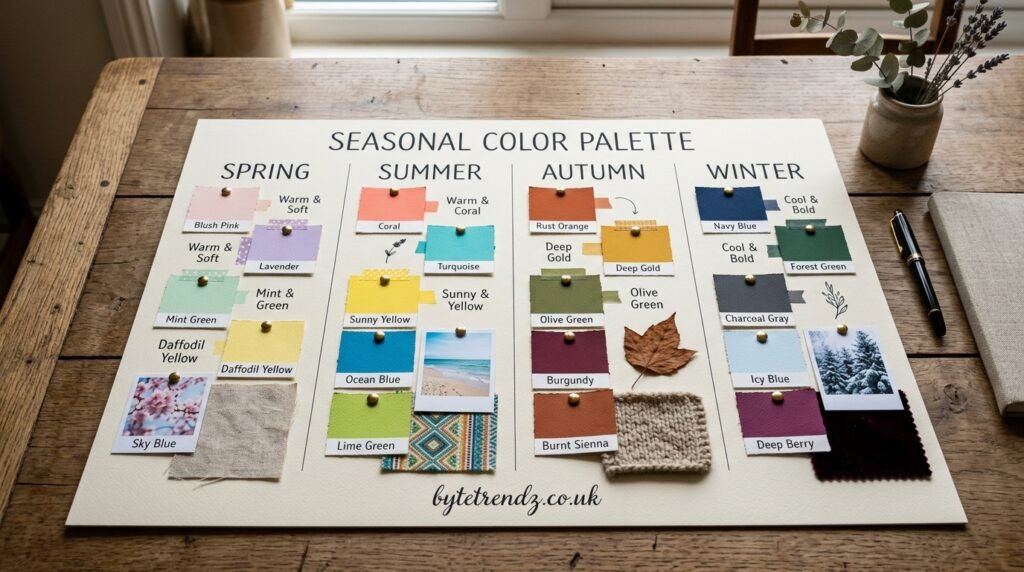
The traditional system divides people into four broad groups: spring, summer, autumn, and winter. Spring is generally associated with warm, bright, and fresh colors, such as coral, warm turquoise, and golden yellow. People who fall into this category often have a lively, sunny quality to their coloring.
Summer, on the other hand, leans toward cool and soft tones. Think of dusty rose, soft lavender, and muted blue. This palette suits people with cooler undertones and a gentle contrast between their skin, hair, and eyes. Autumn is the warm and earthy category, featuring colors like rust, olive green, and mustard, which reflect the rich tones seen in nature during the fall months.
Winter completes the group with bold, high-contrast colors such as true red, emerald, and icy white. People in this category usually have strong contrast between their features, which allows them to carry deep or vivid shades with ease. These four categories form the base language that most personal color systems still build upon.
The Rise of the 12 Season Color Analysis System
While the four-season model is a helpful starting point, many stylists now use a more detailed approach called the 12 season color analysis system. This method divides each of the four main seasons into three subtypes, giving a total of twelve distinct color groups. The purpose of this expansion is to offer more accurate and personalized recommendations.
Each subtype is defined by a dominant trait, which can be based on value, meaning how light or deep the coloring is, hue, meaning how warm or cool it leans, or chroma, meaning how soft or bright it appears. For example, a Light Spring is both light and warm, while a Deep Winter is both dark and cool. This layered structure helps account for the natural variation between individuals who might not fit neatly into just one of the four original seasons.
The twelve subtypes typically include Light Spring, True Spring, and Bright Spring, followed by similar divisions for Summer, Autumn, and Winter. This expanded framework has become especially popular because it allows people to find a palette that feels genuinely tailored to their unique combination of skin, hair, and eye color, rather than a general approximation.
How to Identify Your Seasonal Color Palette
Figuring out your seasonal color palette starts with observing three main features: your skin undertone, your hair color, and your eye color. Skin undertone is often the most important factor, and it is usually described as warm, cool, or neutral. A simple way to check this is by looking at the veins on your wrist in natural light. Greenish veins usually suggest a warm undertone, while bluish or purplish veins point to a cooler undertone.
Hair color also plays a role, though it can change over time due to dyeing or natural graying, so many analysts prefer to look at your natural, undyed color from childhood or your eyebrows for a more accurate reference. Eye color adds another layer of information, especially when you notice flecks or rings of color within the iris, which can hint at warm or cool undertones.
Many people choose to consult a professional color analyst who uses fabric draping to test different shades against their face in natural light. This process involves holding various colored fabrics near the face to see which ones make the skin look brighter and more even, and which ones create shadows or a dull appearance. Online quizzes and color analysis apps have also become common, though a professional session usually offers more precise and reliable results.
Spring Color Palette Explained
The spring color palette is known for its warmth, brightness, and fresh energy. This group draws inspiration from the colors that appear in nature as the season begins, such as new leaves, blossoming flowers, and clear skies. Popular shades include coral, peach, warm turquoise, and golden yellow, all of which carry a lively and youthful quality.
People who suit the spring palette often have warm undertones paired with a naturally bright or clear complexion. Within the 12 season system, spring is further divided into Light Spring, True Spring, and Bright Spring, each reflecting a slightly different balance of warmth and intensity. Light Spring leans toward softer, more delicate shades, while Bright Spring embraces bold, vivid colors with strong warmth.
When dressing within this palette, it helps to avoid overly muted or cool-toned shades, since they can make the complexion look washed out. Instead, leaning into warm pastels, fresh greens, and sunny yellows tends to bring out the natural radiance that spring coloring is known for.
Summer Color Palette Explained
The summer color palette carries a cool, soft, and elegant quality, often compared to a hazy summer morning. Shades like powder blue, dusty rose, soft lavender, and cool gray dominate this group, offering a gentle and blended look rather than a bold contrast. This palette suits people with cool undertones and features that appear naturally soft rather than sharply defined.
Within the expanded 12 season framework, summer splits into Light Summer, True Summer, and Soft Summer. Light Summer favors delicate, airy tones, True Summer sits in the middle with balanced cool and muted shades, and Soft Summer leans into gentle, low-contrast colors that blend smoothly with muted skin tones.
Choosing colors from the summer palette generally means avoiding overly warm or highly saturated shades, since these can overpower softer natural coloring. Cool pastels, muted blues, and rosy pinks tend to work best, helping to enhance the calm and refined quality associated with this seasonal group.
Autumn Color Palette Explained
Autumn represents warmth combined with richness and depth, much like the changing leaves and harvest colors seen during the fall season. This palette includes shades such as rust, olive, mustard yellow, and deep terracotta, all of which carry an earthy and grounded feeling. People who suit this palette typically have warm undertones paired with a naturally rich or golden quality to their skin and hair.
The 12 season system divides autumn into Soft Autumn, True Autumn, and Dark Autumn. Soft Autumn blends warmth with muted tones, True Autumn sits at the center with rich, warm colors, and Dark Autumn leans into deeper, more intense shades that still carry warmth at their core.
For those working within an autumn color palette, it is generally best to steer clear of icy or overly cool tones, as they can clash with the natural warmth of the skin. Instead, embracing deep greens, warm browns, and burnt orange tends to create a harmonious and flattering look.
Winter Color Palette Explained
Winter is defined by its bold, high-contrast, and cool character, often described as crisp and dramatic. This palette features colors such as true red, emerald green, sapphire blue, and icy white, all of which stand out with striking clarity. People who suit winter coloring often have strong contrast between their skin, hair, and eyes, which allows them to wear deep or vibrant shades without looking overwhelmed.
Within the 12 season model, winter breaks down into Dark Winter, True Winter, and Bright Winter. Dark Winter emphasizes deep, cool intensity, True Winter balances coolness with clarity, and Bright Winter leans toward vivid, highly saturated colors that create maximum contrast.
When building a wardrobe around the winter palette, it helps to avoid overly warm or muted shades, since they can dull the natural sharpness of winter coloring. Instead, pure black, icy pastels, and jewel tones tend to complement this group beautifully, allowing the natural contrast to shine through.
Practical Tips for Using Your Seasonal Color Palette
Once you have identified your seasonal color palette, the next step is applying it to your everyday life in a practical way. Start with the pieces you wear closest to your face, such as tops, scarves, and makeup, since these have the biggest impact on how your complexion appears. You do not need to replace your entire wardrobe overnight; instead, gradually add pieces in your best colors while phasing out shades that tend to wash you out.
It also helps to use your palette as a guide rather than a strict rule. Fashion should still feel enjoyable, so if you love a color outside your palette, you can incorporate it through accessories, shoes, or bags rather than avoiding it completely. This approach keeps your style flexible while still benefiting from the overall harmony your palette provides.
Beyond clothing, your seasonal color palette can also guide choices in makeup, hair color, and even home decor. Selecting foundation shades, blush tones, and lipstick colors that align with your palette can make your complexion look more even and natural. Similarly, choosing wall colors or furniture tones that echo your best shades can create a space that feels calm and cohesive.
Conclusion
A seasonal color palette offers a simple yet effective way to understand which colors genuinely work with your natural coloring. Whether you follow the traditional four-season model or explore the more detailed 12 season color analysis system, the goal remains the same: helping you look and feel your best through colors that complement rather than compete with your features. By taking the time to understand your undertone, hair color, and eye color, you can build a wardrobe and beauty routine that feels effortless and consistently flattering. Like any styling tool, it works best when used as a helpful guide rather than a rigid rule, leaving plenty of room for personal expression along the way.
Frequently Asked Questions
What is a seasonal color palette? A seasonal color palette is a group of colors that match a person’s natural skin undertone, hair color, and eye color, grouped under spring, summer, autumn, or winter categories.
How do I find my seasonal color palette at home? You can start by checking your skin undertone through your wrist veins, observing your natural hair color, and noting any flecks of color in your eyes. Online quizzes can offer a starting point, though a professional draping session is usually more accurate.
What is the difference between the 4 season and 12 season systems? The 4 season system groups people into spring, summer, autumn, or winter, while the 12 season system divides each of these into three subtypes based on value, hue, or chroma, offering more precise recommendations.
Can my seasonal color palette change over time? Your underlying skin undertone generally stays the same, but changes in hair color, tanning, or aging can sometimes shift how certain shades appear on you, which is why some people choose to revisit their analysis periodically.
Do I have to only wear colors from my palette? No, your palette is meant to be a helpful guide rather than a strict rule. You can still enjoy colors outside your palette, especially through accessories, while relying on your best shades for pieces worn closest to your face.
