
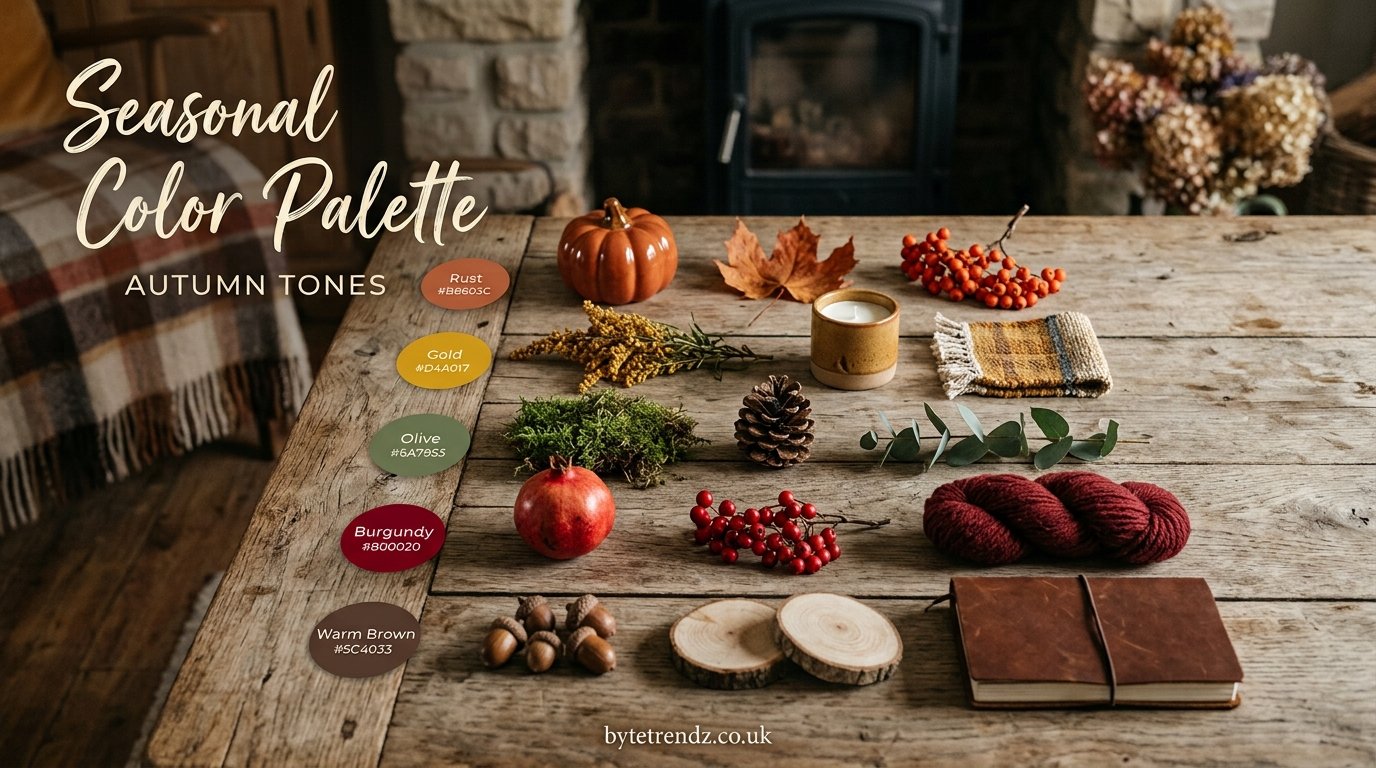

Have you ever put on a certain shirt and had someone ask if you were tired, even though you felt fine? Or worn another color and gotten compliments all day without doing anything different? That reaction often has nothing to do with your mood and everything to do with color. This is the idea behind the seasonal palette system, a method that groups people into four broad categories, Spring, Summer, Autumn, and Winter, based on how their natural skin tone, hair, and eye color react to different hues. Seasonal Color Palette It is not about trends or what is fashionable this year. It is about understanding which shades work with your natural coloring instead of against it.
What Is a Seasonal Color Palette?
A seasonal color palette is a personalized set of colors that complement your natural skin undertone, hair shade, and eye color. The idea originated from color theory studies in the twentieth century and was later popularized in fashion and beauty circles as personal color analysis. Instead of guessing which clothes or makeup shades suit you, this system gives a structured starting point based on three qualities: temperature, meaning whether colors lean warm or cool, value, meaning how light or dark they appear, and intensity, meaning whether they are bright and clear or soft and muted.
Each of the four seasons represents a unique combination of these three qualities. Spring and Autumn are generally warm, while Summer and Winter lean cool. Spring and Winter tend to suit brighter, clearer colors, while Summer and Autumn usually look better in softer, muted tones. Once you understand which season describes your natural coloring, choosing clothing, makeup, and even home decor becomes far less stressful and much more intentional.
The Origins and Science Behind Seasonal Color Analysis
Seasonal color theory traces back to color theorist Johannes Itten, who first grouped by warm and cool temperature relationships. This concept was later expanded by Carole Jackson in her well-known book on personal color, which introduced the four-season model still used today. Since then, the system has evolved into more detailed subcategories, such as warm spring, soft summer, deep autumn, and true winter, allowing for more precise recommendations.
The science behind this approach is fairly simple. Human skin contains varying levels of melanin, hemoglobin, and carotene, which create undertones that lean warm, cool, or neutral. When a color’s temperature matches your skin’s undertone, it tends to blend smoothly with your complexion, making skin look even and eyes appear brighter. When the color clashes, it can create an unflattering contrast that draws attention to shadows, redness, or dullness rather than your features. This is why the same red lipstick can look radiant on one person and slightly off on another.
Spring: Warm, Bright, and Fresh
People in the Spring category typically have warm undertones paired with a fresh, clear quality to their coloring. Hair often ranges from golden blonde to light auburn or warm light brown, while eyes are frequently blue, green, or light hazel with golden flecks. Skin tends to be light to medium with a peachy, golden, or ivory warmth to it.
The best for Spring types are warm and vibrant rather than deep or muted. Think coral, peach, warm yellow, turquoise, light warm green, and golden brown. These shades echo the natural brightness of Spring . Neutrals should stay warm as well, so camel, cream, and warm beige work far better than stark black or cool gray, which can overwhelm the softer contrast of this palette.
Summer: Cool, Soft, and Muted
Summer coloring is cool but gentle, without the sharp contrast seen in Winter. Hair is usually ash blonde, soft brown, or cool light brown, and eyes tend to be blue, gray, or soft green. Skin generally carries a cool, sometimes pink or rosy undertone, and the overall look has a delicate, blended quality rather than high contrast.
Soft, dusty colors flatter this palette best. Powder blue, lavender, rose pink, soft teal, and muted mauve all work beautifully, while sharp, saturated colors can look harsh against Summer’s gentle coloring. Even neutrals should stay cool and soft, such as dove gray or soft navy, rather than warm camel or true black, which can compete with the natural subtlety of this season.
Autumn: Warm, Earthy, and Rich
Autumn types share warmth with Spring, but the overall effect is deeper and more muted rather than bright and clear. Hair often appears in shades of auburn, chestnut, or rich golden brown, while eyes are commonly warm brown, hazel, or green. Skin usually has a golden, olive, or warm beige undertone with a richer depth than Spring coloring.
This palette thrives on earthy, warm shades such as mustard, rust, olive green, terracotta, and deep warm orange. These mirror the natural richness of autumn foliage, which is where the season gets its name. Black tends to look severe against this coloring, so warm alternatives like chocolate brown or deep olive make better substitutes for a grounding neutral.
Winter: Cool, Deep, and Contrasted
Winter is defined by high contrast and cool undertones. Hair is often dark brown or black, though some Winters have platinum blonde or silver hair paired with striking cool undertones. Eyes tend to be deep brown, dark blue, or gray, and skin can range from fair to deep, but always carries a cool base.
Because Winter coloring has natural drama, it can handle bold, saturated that other seasons might struggle with. True red, emerald green, cobalt blue, and magenta work well, as do sharp neutrals like pure white, black, and charcoal. Muted or dusty tones can flatten this striking coloring, so clarity and depth are the guiding principles when choosing Winter shades.
How to Determine Your Skin Undertone at Home
Figuring out your season starts with identifying your undertone, and this can be done with a few simple observations in natural daylight. Stand near a window during the day, avoiding yellow-toned indoor lighting, which distorts how appear against your skin. Remove heavy makeup and pull hair away from your face so you can focus on your natural coloring rather than dyed or styled elements.
A helpful trick is to compare fabrics or clothing items side by side rather than judging one color alone. Hold a warm gold fabric next to a cool silver one under your jaw and observe which makes your skin look more even and your eyes more awake. Try cream against pure white, or coral against a cool raspberry pink. Patterns will start to emerge, and while this home method will not replace a professional draping session, it gives a reliable starting point for narrowing down your season.

Using Your Palette in Fashion, Makeup, and Home Decor
Once you know your season, applying it becomes practical rather than restrictive. In fashion, this means choosing your most flattering for pieces that sit closest to your face, such as tops, scarves, and jackets, since these have the biggest visual impact on your complexion. Items further from the face, like shoes or bags, have more flexibility since they interact less directly with your skin tone.
Makeup follows a similar logic. Foundation should always match your undertone rather than your season, but blush, lipstick, and eyeshadow can lean into your palette for a more harmonious look. Warm seasons often suit peach or terracotta blush and warm-toned eyeshadow, while cool seasons look best with rosy or berry shades and cool-toned neutrals. Even home decor can benefit from this thinking, since surrounding yourself with that suit your natural coloring, like wall paint near a mirror or lighting choices, can make everyday spaces feel more flattering too.
Conclusion
Seasonal color palettes are less about following strict rules and more about understanding your own natural well enough to make confident choices. Whether you fall into Spring, Summer, Autumn, or Winter, or somewhere between two of these categories, the goal is the same: to choose colors that make your skin look healthy, your eyes look bright, and your overall appearance feel effortless. Once you learn your season, shopping, applying makeup, and even decorating your space become far less about guesswork and far more about working with what you naturally have. Small choices can make a noticeable difference, and once you start noticing which shades genuinely suit you, it becomes hard to go back to guessing.
Frequently Asked Questions
Can my color season change over time? Your underlying skin undertone generally stays consistent throughout life, but skin can appear lighter or darker due to sun exposure, aging, or seasonal changes, which sometimes makes people feel their season has shifted. In most cases, the core season remains the same even if the exact shade of your skin changes slightly.
What if I don’t fit perfectly into one season? Many people sit between two categories, which is completely normal since human exists on a spectrum rather than in four rigid boxes. Subcategories like warm spring, soft summer, or deep autumn were created specifically to capture these in-between cases more accurately.
Is professional color analysis worth it? A professional draping session, where a trained analyst holds different colored fabrics near your face under controlled lighting, tends to give more accurate results than self-analysis, especially for people with less obvious warm or cool undertones. That said, careful observation at home in natural daylight can still give a fairly reliable starting point.
Do seasonal palettes apply to all skin tones? Yes, seasonal analysis works across the full range of skin tones, from fair to deep, since it is based on undertone and contrast rather than how light or dark the skin is. Each season includes examples across different depths of skin color.
Does wearing colors outside my season mean I’ll look bad? Not necessarily. Seasonal palettes are a guide for finding your most flattering shades, not a strict rule about what you are allowed to wear. Many people successfully wear colors outside their palette, especially away from the face, or by choosing accessories, prints, or accent pieces in non-ideal shades while keeping the main pieces closer to their best colors.
